Curriculum
Senior Cycle
English
Senior Cycle English provides students with a challenging and rewarding opportunity to refine their critical thinking, creativity, and analytical skills. The course is designed to prepare students for the demands of the Leaving Certificate examination while fostering a lifelong appreciation of literature, language, and the power of personal expression.
One of the key aspects of Senior Cycle English is the emphasis on creativity and personal engagement with language, particularly in Paper One of the Leaving Certificate. Students explore a range of creative forms, including personal essays, speeches, and short stories. This section of the course allows them to express their individuality, develop their voice, and hone their ability to communicate effectively across different contexts.
In Paper Two, students delve into an in-depth study of literature, engaging with a rich array of texts that challenge them to think critically and interpretively. Our students study Shakespearean texts such as King Lear and Macbeth, where they explore timeless themes like power, ambition, loyalty, and the human condition. The Comparative Study is another cornerstone of the course, where students analyse and compare texts from different genres and cultural contexts, enhancing their understanding of universal themes and diverse perspectives.
Poetry forms an integral part of Senior Cycle English, offering students a chance to engage deeply with the nuances of language and imagery. They explore the works of renowned poets like Sylvia Plath, Seamus Heaney, and Patrick Kavanagh, whose poems invite students to reflect on personal, cultural, and existential themes. This study encourages students to appreciate the beauty and depth of poetic expression while developing their analytical skills through close reading and critical interpretation.
Studying Senior Cycle English equips students with invaluable skills for both academic and personal success. Through engagement with diverse texts, they develop clear communication, critical thinking, and a deeper appreciation for language and literature. The course not only prepares students for the Leaving Certificate but also nurtures their growth as empathetic, thoughtful individuals, ready to engage confidently with the world around them.
Maths
Mathematics at Senior Cycle builds on the learning at Junior Cycle and develops mathematical knowledge, skills and understanding needed for continuing education, work and life. Through the study of mathematics, students develop a flexible, disciplined way of thinking which enables them to solve problems in mathematical and real-world contexts.
In St. Mary’s, the syllabus is provided at Higher & Ordinary level, with Foundation level also assessed. There are two examination papers at Higher and Ordinary level, and one at Foundation level. 25 bonus points are awarded for a grade of H6 or above at Higher level. Students are encouraged to study at the level appropriate to their needs and aspirations. There are many careers which require or benefit greatly from having Higher Level Maths. Therefore, it is a good idea for students to research these careers before deciding on their level. It is also important for students to consult with their Maths teacher at Junior Cycle, if they are unsure about the level of Senior Cycle Maths that would best suit them.
The Leaving Certificate Mathematics syllabus is comprised of five strands:
- Statistics and Probability
- Geometry and Trigonometry
- Number
- Algebra
- Functions
These five strands are not studied alone; instead, connections are made within and across them, and with other areas of learning. These strands are also encompassed by the five key skills identified as being central to teaching and learning across the entire Senior Cycle Curriculum: information processing, being personally effective, communication, critical and creative thinking and working with others.
No longer just the language of science, mathematics contributes in direct and fundamental ways to business, finance, health and defence. Whether you are a future Engineer, Technician, Geologist, Economist, Accountant, Actuary, Air Traffic Controller, Architect, Astronomer, Banker, Biologist, Clerical Worker, Chemist, Civil Servant, Computer Operator (etc.!) or just trying to manage your monthly budget, Mathematics has a place in everyone’s life! Please do not hesitate to link in with any of the Maths teachers in St. Mary’s should you require any more information on Senior Cycle Mathematics.
TY Maths
Maths is studied by all students in Transition Year. It builds upon the foundational knowledge gained in Junior Cycle Maths and introduces students to more advanced mathematical concepts and applications, thus keeping them focused academically throughout Transition Year.
The course bridges the gap between Junior Cycle and Leaving Cert Maths. It offers students the opportunity to revisit difficult Junior Cycle topics, build on and deepen understanding of key topics while it also challenges them by introducing new, complex ideas to provide a solid foundation for the Leaving Cert.
The course covers algebra, trigonometry, statistics & probability, and geometry. Transition Year Maths encourages students to explore real-world applications of mathematics and develop their ability to analyse and solve complex problems through projects and group-based work. Teachers will use a range of techniques to do this including class tasks and activities, project work and investigative work. Please do not hesitate to link in with any of the Maths teachers in St. Mary’s should you require any more information on Transition Year Mathematics.
Physics
Physics at Leaving Certificate level allows students to gain a deeper understanding of some of the topics introduced in Junior Cycle Science, such as forces, motion, and energy, while also exploring entirely new concepts like particle physics, electromagnetism, and wave theory.
In Physics, students will engage with a wide range of topics, with some being heavily theory-based and others incorporating practical and analytical elements. Through experiments, students enhance their understanding by seeing the principles they have learned in theory being applied in real-world situations.
At Junior Cycle, students may have explored basic concepts of motion and electricity. However, at Leaving Certificate level, these topics are studied in greater depth, with students conducting mandatory experiments such as investigating the laws of motion, verifying Ohm’s Law, and measuring the speed of sound. These practical activities help develop problem-solving skills and scientific reasoning, essential for further study in physics and engineering fields.
Throughout the two years of completing Physics, students develop a mindset of curiosity, logical thinking, and problem-solving. They gain the skills necessary to apply their learning across different topics and recognize how the principles of physics interconnect.
Cross-Curricular Links in Physics
Physics has strong connections with many other subjects, allowing students to see its applications across various fields:
- Mathematics – Physics requires strong mathematical skills, including algebra, trigonometry, and graphing, making it closely linked to the mathematics curriculum.
- Chemistry – Topics such as radioactivity, atomic structure, and energy changes in reactions overlap between physics and chemistry.
- Biology – Physics plays a role in human physiology, including concepts such as optics (the eye), forces in the body (biomechanics), and electrical impulses in the nervous system.
- Engineering & Technology – Mechanics, electricity, and materials science in physics are fundamental to engineering and applied technology subjects.
- Geography – The study of energy sources, weather patterns, and the Earth’s magnetic field in geography is connected to physics principles.
- History – Physics has a rich history, with key discoveries such as Newton’s laws of motion, Einstein’s theory of relativity, and the development of quantum mechanics shaping modern science and technology.
Why Study Leaving Certificate Physics?
Physics is an essential subject for students interested in careers in engineering, technology, medicine, aviation, and data science. Even for those not pursuing a science-based career, physics develops critical thinking, problem-solving, and analytical skills that are valuable in many fields.
For more information on the current Leaving Certificate Physics curriculum, visit: Physics | NCCA
Biology
Biology at Leaving Certificate level allows students to deepen their understanding of fundamental biological concepts first introduced in Junior Cycle Science. Students will expand their knowledge of topics such as cell biology, genetics, and ecology, while also exploring new areas like microbiology, human physiology, and biotechnology.
Biology covers a wide range of topics, with some being heavily theory-based and others incorporating practical and analytical components. A key aspect of the course is experimental work, where students carry out mandatory investigations to reinforce their understanding of key concepts. These experiments allow students to apply theoretical knowledge in a hands-on setting, developing important laboratory skills and scientific reasoning.
At Junior Cycle, students may have studied the basics of enzymes and digestion, but in Leaving Certificate Biology, they will explore enzyme action in greater depth through practical experiments and a more detailed understanding of biochemical processes. Similarly, genetics—briefly introduced in Junior Cycle—becomes a major area of study, covering topics such as DNA replication, genetic engineering, and inheritance patterns.
Throughout the two years of study, students will develop a scientific mindset focused on inquiry, observation, and analytical thinking. They will learn to interpret data, evaluate evidence, and apply biological principles to real-world situations, preparing them for further study in science-related fields.
Cross-Curricular Links in Biology
Biology connects with several other subjects, helping students make links between different areas of learning:
- Chemistry – Many biological processes, such as respiration, photosynthesis, and digestion, involve chemical reactions. The study of biomolecules (carbohydrates, proteins, lipids, and nucleic acids) is also closely linked to chemistry.
- Physics – Understanding biological systems such as nerve impulses, muscle contractions, and the eye involves physics principles like electricity and optics.
- Mathematics – Students use mathematical skills when analyzing experimental data, working with biological data.
Some more information about the current Leaving Certificate Chemistry curriculum may be found at the following link: Biology
Chemistry
Chemistry at Leaving Certificate level allows students to gain a deeper understanding of some of the topics covered in Chemistry in the Junior Cycle such as the Periodic Table and Chemical Bonding as well as allowing students to study completely new topics such as Organic Chemistry and Radioactivity.
In Chemistry, students will complete a range of different styles of topics, where some topics are entirely theory based and others have an even amount of theory and analytical elements. With experiments, students achieve a wealth of understanding by seeing what they have learned about in theory being put into practice.
In Junior Cycle, students would have completed a titration to represent neutralisation. However, at Leaving Certificate level students will complete eight titrations from acids and bases and oxidation-reduction. This is one of the few examples of building upon basic knowledge obtained in Junior Cycle.
Throughout the two years of completing Chemistry, students will gain a mindset that revolves around enthusiasm for learning, curiosity and analytical thinking. Students gain the skills necessary to build upon their learning from each topic and recognise how they link together.
Chemistry has cross curricular links to many subjects.
Many topics in chemistry require students to complete mathematical problems therefore students will be able to apply learning from the mathematics classroom in the chemistry lab. When studying rates of reactions, students learn about catalysts and enzymes which is a topic that is discussed in the biology lab. Radioactivity has cross curricular links to physics and when studying the chemistry of water and when studying environmental chemistry, water treatment and pollution are discussed which may link to what students may study in geography. Chemistry even has links to history as students will learn all about the origins of the periodic table and how scientific understanding developed over time to arrive at the structure of the atom that is now accepted.
Some more information about the current Leaving Certificate Chemistry curriculum may be found at the following link: Chemistry | NCCA
History
Senior Cycle History provides students with a challenging and rewarding opportunity to deepen their critical thinking, analytical, and research skills. The course is designed to prepare students for the demands of the Leaving Certificate examination while fostering a lifelong interest in understanding the past and its impact on the present.
One of the key aspects of Senior Cycle History is the emphasis on historical inquiry and independent learning, particularly in the Research Study Report (RSR). Students have the opportunity to choose a topic of personal interest, conduct in-depth research using a variety of primary and secondary sources, and present their findings in a structured and coherent manner. This component allows them to develop critical research skills, evaluate evidence, and build their ability to communicate effectively.
The study of History at Senior Cycle also includes an in-depth exploration of key historical periods and topics. Students engage with topics such as Movements for Political and Social Reform, Dictatorship and Democracy in Europe, Ireland: Sovereignty and Partition, Northern Ireland: 1949-1993 and The USA and the World. These topics challenge students to think critically about cause and consequence, continuity and change, and the significance of historical events and movements.
Historiography and interpretation are integral to Senior Cycle History. Students evaluate different perspectives and interpretations of historical events, fostering an understanding of the complexities and debates within the field of history. This aspect of the course sharpens their critical thinking and analytical skills, as they learn to assess the reliability and validity of sources and arguments.
Studying Senior Cycle History equips students with invaluable skills for both academic and personal success. Through engagement with diverse historical periods, themes, and perspectives, they develop the ability to critically assess information, construct evidence-based arguments, and appreciate the relevance of history in shaping the modern world. The course not only prepares students for the Leaving Certificate but also nurtures their growth as informed, thoughtful, and active citizens, ready to engage with the complexities of the contemporary world.
Geography
St. Mary’s HFG has a strong tradition & uptake of students choosing to continue their study of geography into their leaving cert.
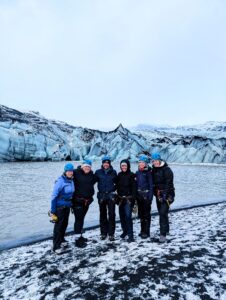
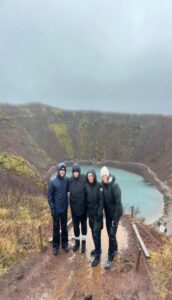
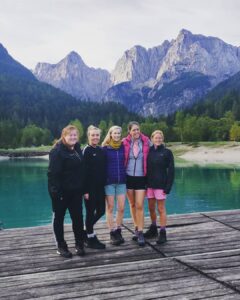
We are very fortunate to regularly schedule international & national fieldtrips to wonderful geographical locations to reinforce and support student learning.
E.g. Iceland, Slovenia, Scilly, The Burren in Co. Clare, The Giants Causeway in Co. Antrim.
The Leaving Certificate Geography curriculum focuses on developing students’ understanding of physical, human, and environmental geography at local, national, and global levels. The course, outlined by the National Council for Curriculum and Assessment emphasizes analytical, research, and practical skills, preparing students for higher education and careers related to geography.
Structure of the Leaving Certificate Geography Curriculum
The course is divided into Core Units, Elective Units, and Optional Units, with a strong focus on inquiry and independent research.
Core Units
- Patterns and Processes in the Physical Environment
- Study of natural processes shaping the Earth’s surface (e.g., plate tectonics, volcanic activity, weathering, and erosion).
- Topics include rivers, coasts, glaciation, climate, and soils.
- Emphasis on the interaction between physical processes and human activities.
- Regional Geography
- Analysis of regions at local, European, and global scales.
- Examination of physical, economic, and cultural characteristics.
- Examples include urban and rural regions, industrial areas, and developing versus developed regions.
- Geographical Investigation and Skills
- A practical component involving data collection, fieldwork, and analysis.
- Students complete a Geographical Investigation (worth 20% of the final grade) on a topic of their choice from a prescribed list, such as river studies, land use surveys, or urban studies.
Elective Units
Students choose one elective to study in-depth:
- Elective 1: Patterns and Processes in Economic Activities
- Examines the geography of economic systems, industrial development, globalization, and trade.
- Topics include the role of transnational corporations, energy resources, and sustainable economic practices.
- Elective 2: Patterns and Processes in the Human Environment
- Focuses on human population trends, migration, settlement patterns, and urban development.
- Students analyse demographic data, urbanization, and the impact of human activities on the environment.
Optional Units (Higher Level Only)
Students at Higher Level choose one optional unit for additional study:
- Global Interdependence
- Exploration of global issues such as trade, aid, development, and environmental sustainability.
- Geoecology
- Study of ecosystems, biomes, and the interrelationship between climate, soil, and vegetation.
- Culture and Identity
- Examines cultural geography, identity, language, and globalization’s impact on cultures.
- The Atmosphere-Ocean Environment
- Focuses on climate systems, ocean currents, and the relationship between the atmosphere and oceans.
Assessment
- Geographical Investigation
- Worth 20% of the final grade.
- Students conduct fieldwork and write a report demonstrating research, data analysis, and interpretation skills.
- Written Examination
- Higher and Ordinary Level exams assess knowledge across core, elective, and optional units.
- Questions include essays, short-answer questions, and map analysis.
Skills Development
Students develop a wide range of skills, including:
- Research and Fieldwork: Gathering and analysing primary and secondary data.
- Data Analysis: Interpreting maps, graphs, aerial photographs, and statistical data.
- Critical Thinking: Evaluating global issues like climate change, economic development, and urbanization.
- Presentation: Communicating findings in written and graphical formats.
Benefits of Leaving Certificate Geography
- Practical Knowledge: Helps students understand global challenges such as climate change, migration, and resource management.
- Career Readiness: Prepares students for careers in urban planning, environmental science, GIS, teaching, and more.
- Transferable Skills: Equips students with critical thinking, data analysis, and research skills valuable across disciplines.
- Lifelong Learning: Encourages curiosity about the world and promotes informed citizenship.
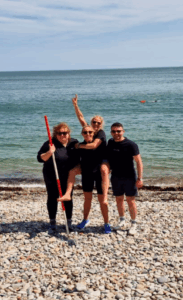
Meet the Geography Department!
Business
TY-Business/Accounting/LCVP/A
There are three business options available during Transition Year, and each course lasts for the full year. These courses are designed to give students who didn’t take Business Studies for the Junior Certificate a chance to explore business subjects before choosing their Leaving Certificate options. For those who did take Business Studies, the courses act as a helpful refresher.
Senior Cycle
Leaving Certificate Business helps students understand the importance of business activity and encourages a positive and ethical attitude towards enterprise.
Through the course, students develop critical thinking, creativity, and organisational skills, while also improving literacy and numeracy using real-life examples. Business offers a strong foundation for various careers in areas like business, marketing, law, enterprise, and management.
The course is assessed at both Ordinary and Higher levels.
LCVP
The LCVP (Leaving Certificate Vocational Programme) is an extra option that students can take alongside their seven subjects. It focuses on Enterprise Education, Work Preparation, and Work Experience, blending academic learning with self-directed projects, enterprise, work, and community involvement.
Assessment is split between a written exam (40%) and a coursework portfolio (60%). A Distinction in LCVP is equivalent to a H3 in a Higher Level subject.
Accounting
Personal & Health Education (SPHE)
Senior Cycle SPHE is provided through a minimum of sixty hours over 5th and 6th year, and is a mandatory part of the senior cycle curriculum.
Aim of SPHE at Senior Cycle
This course aims to develop the knowledge, understanding, skills, dispositions and values that will empower students to be healthy, resilient, confident, responsible and empathetic young adults; nurture respectful, loving and caring relationships; and prepare for the opportunities, responsibilities and experiences of life now and beyond school.
Student voice in SPHE
Our transition year students have the opportunity to volunteer as part of an SPHE Student focus group, to develop ideas for their senior cycle curriculum content, in line with the learning outcomes listed in the Senior Cycle SPHE Specification. Throughout 5th and 6th year they will continue to have input into the topics covered, to ensure lessons are relevant and suited to their learning needs.
The SPHE Strands at Senior Cycle
The students will explore the following topics in class under these three strand areas:
- Health and Wellbeing- Within this strand students will explore the factors that influence their physical, social, spiritual, emotional and mental wellbeing and the relationships between each. They will learn ways to take care of themselves and stay as healthy as possible, with a particular focus on gaining awareness, skills, techniques and information to protect their mental health.
- Relationships and Sexuality- Within this strand students will explore the wide range of relationships that are important for their lives with a particular focus on gaining the awareness, knowledge and skills to support them in creating and nurturing respectful, caring and healthy relationships. This strand also supports students to recognise and be empowered to respond to instances of abuse or violence in relationships.
- Into Adulthood- Within this strand students will gain specific knowledge and skills to support them as they make the transition to adulthood and learn how to take greater responsibility for themselves. This includes being enabled to manage choices, develop the skills that are needed to plan for the future, establish and stick to good habits, and achieve goals. It also supports students in learning how to take care of themselves in times of change or challenge, understanding their rights and responsibilities before the law, and building the skills needed to advocate for and express solidarity with those experiencing discrimination or inequality.
Further information available here:
Senior Cycle SPHE Specification
Assessment in Senior Cycle SPHE
Assessment in senior cycle SPHE aims to support the students increase in knowledge, their ability to apply what they learn, increase their self-awareness, support their wellbeing and develop their decision making.
Students will complete eight key assignments, based on the learning outcomes in the three strand areas. These will be completed over 5th and 6th year and assessment achievements will be reported on through our end of term reports. At the end of 6th year, students who have successfully completed the eight assignments will be awarded with a school Senior Cycle SPHE certificate.
Further details on assessment in senior cycle SPHE can be accessed here;
Modern Foreign Languages
At St. Mary’s, we are proud to offer students a comprehensive and engaging experience in Modern Foreign Languages (MFL) as they progress from Junior Cycle to Leaving Certificate. Students continue with the language they chose at Junior Cycle—German, French, or Spanish—building on their foundational skills to achieve greater fluency and cultural understanding.
Additionally, students have the exciting option to study Japanese as a new language, further broadening their linguistic and cultural horizons.
Curriculum Highlights
The Leaving Certificate MFL curriculum is designed to develop advanced language skills through the following key areas:
- Communicative Competence: Strengthening speaking, listening, reading, and writing skills for real-world application.
- Cultural Awareness: Deepening understanding of the history, traditions, and way of life in countries where the language is spoken.
- Critical Thinking and Analysis: Encouraging students to engage with authentic texts, films, and other media to develop interpretative skills.
- Independent Learning: Empowering students to explore and take ownership of their language journey, supported by modern resources.
Interactive and Engaging Learning
Our MFL programme continues to prioritise dynamic and active learning, with opportunities for students to:
- Engage in debates, discussions, and presentations to enhance fluency.
- Complete projects and essays reflecting cultural or thematic research.
- Take part in cultural events, such as European Day of Languages and country-specific celebrations.
- Participate in study trips and exchanges, where possible, for real-life language immersion.
Assessment
The Leaving Certificate MFL assessment prepares students for real-world language use and further studies:
- Oral Examination: An emphasis on spoken fluency and communication skills. Worth 25% of overall grade.
- Written Examination: Testing comprehension, grammar, and essay-writing abilities.
- Listening Test: Assessing the ability to understand authentic spoken language.
Home Economics
The Home Economics Scientific and Social syllabus provides students with knowledge, understanding, skills, and attitudes necessary for managing their own lives as well as for further and higher education and work. The learning experiences in Home Economics develop flexibility and adaptability in students, preparing them for a consumer-oriented society and providing a learning foundation for a wide range of careers.
Subject Content
Home Economics is an applied subject combining theory with practice. It is concerned with the management of resources (material and human) to meet the physical, emotional, intellectual, social, and economic needs of individuals and families. The study of Home Economics emphasises the interdependent relationships that exist between individuals, families, and their immediate and distant environments.
The Leaving Certificate course is a continuation of the Junior Certificate course. While not essential, it is beneficial to have studied this subject to Junior Certificate level. The syllabus is based on a core of three areas of study that is studied by all students and one elective area from a choice of three.
Core
- Food Studies – 45%
- Resource Management and Consumer Studies – 25%
- Social Studies – 10%
Elective
- Home Design and Management – 20%
- Textiles, Fashion and Design – 20%
- Social Studies – 20%
The elective areas are extensions of the core areas and provide students with the opportunity to study certain topics in more depth.
Assessment
Students complete a practical Food Studies Journal following research of briefs issued annually by the State Examinations Commission which is worth 20% of their grade. There will also be a written examination.
There are a large number of career opportunities relating to the study of Home Economics including: B.Ed Home Economics (Teaching), Interior Design, Social Care, Tourism and Catering, Childcare, Fashion Design, Food Product Development, Nutritionist, Dietician, Chef, Baker, Food Stylist, Interior Design, and Environmental Health Officer.
Click here to visit Senior Cycle curriculum.
HOME ECONOMICS SCIENTIFIC & SOCIAL SYLLABUS
Art
Senior Cycle Art builds on the student’s visual communication, critical analysis, process and making skills in the areas of art, craft and design, developed during Junior Cycle Visual Art. It also continues to offer opportunities for developing research skills, including cross-curricular exploration and problem solving that support their lifelong learning.
Art at Senior Cycle provides an excellent opportunity for students to prepare for third level education and the world of work, in a safe space that is reflective of the world beyond school, as much of their work allows for self-direction.
It fosters their ability to:
- communicate both visually and in writing
- research areas of genuine interest to them
- problem solve
- develop their self-motivation as they work on projects
- express their understanding of the world around them
The course has both a hands on practical making component and an academic written element, split seventy/thirty respectively. Students having completed visual art at junior cycle will already be very familiar with the research and analysis of works of art, but are new to the written component. We support all students in this area with clear, scaffolded support in answering essay questions. In this way the subject is also accessible for those who wish to take up art at senior cycle.
Assessment of Leaving Cert Art
Leaving Cert Art is assessed in the following way through the state examinations-
- Coursework Project: Based on a given theme, it is completed between January and April during class time. Students document their visual process in their state examination coursework workbook for both of their final realised artefacts 1& 2, and complete realised artefact 1. This and the coursework workbook are worth 50%
- Five-hour Practical Exam: completed in April to realise their final artefact 2, worth 20%
- Visual Studies Written Exam: Students understanding of contemporary and historical art, craft & design, from Ireland, Europe, and the wider world, is examined through a series of short questions and two essay questions. This is completed in June during the state exams, and is worth 30%.
For further information, the Senior Cycle Art specification is available at Curriculum Online at this link.
Religion
Physical Education
Senior Cycle Physical Education
All students in fifth and sixth year take part in physical education. We also offer Leaving Certificate PE as an additional option. Students choosing LCPE will take part in both the senior cycle PE lessons and separate LCPE lessons.
The senior cycle physical education curriculum follows the new Senior Cycle PE framework, and allows students to develop a different range of skills to those acquired throughout junior cycle. Below is an overview of the curriculum in each year group.
TY
TY students take part in four different blocks of activity, on rotation. These activities cover the stands of personal and social responsibility (sports leadership), sport education, teaching games for understanding, outdoor and adventurous activities and health-related physical activity. The blocks are:
Teaching Games for Understanding: A games-based approach to learning which encourages students to analyse their game play in order to identify skills which are strengths/weaknesses, and to develop practices intended to address these. These are then re-implemented into the game so that the effect of the practices can be measured against games performance. This unit is delivered through either hockey or badminton.
Sports leadership: Students plan and deliver sports sessions to primary school students over a six week block. This improves their organisation, understanding of developing safe and effective sports sessions, and communication and leadership skills.
Sport Education: Students are placed into a team which they remain in for the duration of the block. Within the team, roles are assigned including coaches, warm up leaders, referees and captains. Students gain points over the block for correct kit, designing and participating in creative and effective drills, effort and enthusiasm, team celebrations and much more!
Orienteering/HRPA: Students take part in activities such as orienteering, team building and problem solving activities. These activities aim to improve students’ teamwork, health and fitness, as well as develop skills such as map reading. Where possible, this block includes soe off-site visits.
Fifth Year
Students in fifth year are encouraged to start taking responsibility for their own learning by opting for activities as a class. Students pick one activity from each strand and complete this for one block each. This encourages students to start to identify activities they may have an interest in continuing with after/beyond school and to start to take responsibility for setting up and organising activities. The activity list for both fifth and sixth years is shown below.
Sixth Year
In sixth year, students are again given greater freedom to select activities they are most interested in taking part in. At the beginning of the year, students are given activity options, and as many choices as possible are then offered over the course of the year. Students choose a new activity every half term. This encourages students to engage in active lessons and identify which activities they have found they enjoy over the course of their time in the school.
Activity options for fifth and sixth year:
| Invasion Game | Net/Wall Game | Striking and Fielding Game | Health-related Activity | Aesthetic Activity | Outdoor and Adventurous Activity |
|---|---|---|---|---|---|
|
|
|
|
|
|
Leaving Certificate Physical Education
St. Mary’s has now been offering Leaving Cert Physical Education since 2019 and it is a popular subject within our school. Choosing LCPE may lead to careers in sports psychology, physiology, physiotherapy, teaching and coaching, sports development and many more related areas. In this course, students study the theoretical concepts underpinning sports nutrition, physiology, psychology, sociology and biomechanics. Students are assessed via a written exam (50%), physical activity project (20%) and practical sports performance (30%).
The Leaving Certificate Physical Education course is best suited to those regularly taking part in sport both inside and outside of school. Having a high level of proficiency and knowledge in at least one sport is hugely beneficial in completing the physical activity project and performance assessment, as well as enabling students to grasp theoretical concepts more readily. Having an interest in understanding the theory behind practical concepts is essential, as is a willingness to develop sports skills outside of class time. It is an excellent subject choice for students committed to, and interested in, sport and physical activity.
For more information about the curriculum, please see: Physical Education Curriculum Specification